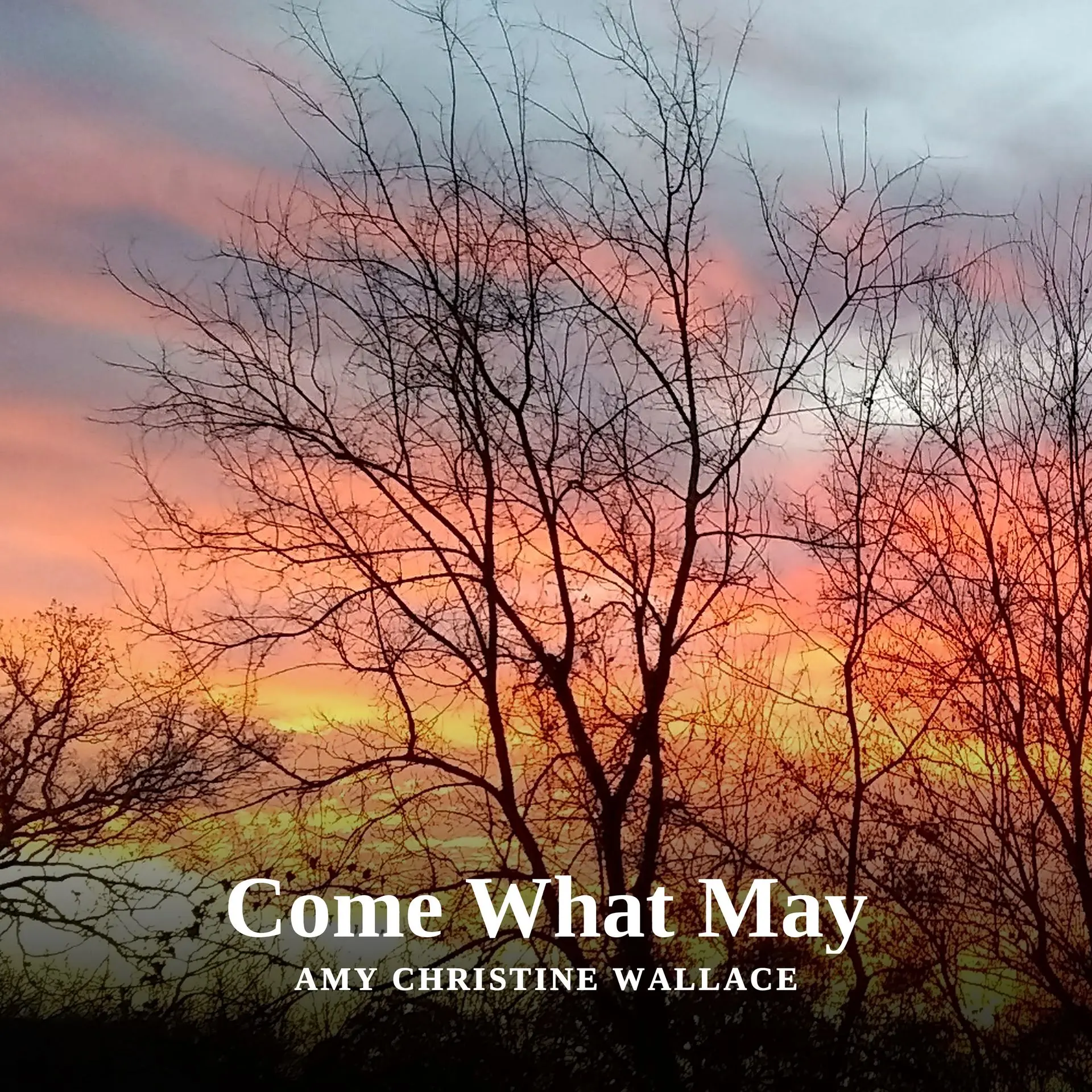
Behind the Song: Come What May
A song for the hard seasons of life—a declaration of praise, trust, and hope when the way forward is uncertain.
Releases December 11, 2026
Where did Come What May begin?
The original version was written in late 2015 during one of the most uncertain periods of my life. I was facing a major personal upheaval and had no idea what the fallout would be or what my life would look like on the other side of it.
That uncertainty is really where the central theme of the song came from: no matter what happens, I will praise God. At the time, I was almost willing myself to believe in His faithfulness in the face of everything I couldn’t know.
The very first line came first. Interestingly, the phrase “come what may” wasn’t nearly as prominent in the original version as it is now. I only used it once in each chorus then. Later, I added another line so the phrase appears twice and really became the central statement of the song.
Was the original version very different musically?
Very different. I originally wrote it on guitar, and it was much more driving and angry sounding. That version came from inside the uncertainty, when I was still facing all of the unknowns ahead of me.
In the summer of 2016, after that particular crisis had passed, I was at a family camp with people from my church. During some free time, I went into the sanctuary and started playing piano. I wasn’t trying to write anything. I was just playing chord progressions and letting some of what I was feeling come out through the music. Then I felt the urge to revisit Come What May.
The core piano progression came first, and the song changed organically from there. I wasn’t consciously trying to slow it down or turn it into something different, but it became this R&B-influenced piano song that sounded completely unlike the original.
By then the uncertainty had changed into grief, sadness and anxiety. I had come through the upheaval, but I was still trying to find my footing afterward. That emotional shift completely changed the way the song felt.
How much did the lyrics change during that rewrite?
Less than you might think. Some material moved between the two verses, and I replaced a few words with ones that felt more honest.
One of the most striking changes was in the first line. Originally I used the word “discouraged.” In the revised version, I changed it to “jaded.”
“Jaded” was much closer to where I actually was emotionally by then. I had been through an incredibly painful season that had unsettled a lot of things I thought were stable, and I came out of it wounded.
Another important change was the line, “In my darkness, my soul cries out.” Originally that place in the song said, “In my weakness, I stand in Your power,” which I moved to the second verse.
“In my darkness, my soul cries out” was much more representative of that moment in my life. It captured just how dark that season still felt, even after the immediate crisis had passed.
The song uses the image of a hurricane. Where did that come from?
That word was probably already floating around in my head because of How He Loves, written by John Mark McMillan, though I was more familiar with the David Crowder Band version.
When I wrote Come What May, “hurricane” felt like the right word for the emotional chaos I was experiencing.
I actually like the parallel now. In Come What May, the hurricane is the chaos I was experiencing; in How He Loves, the hurricane is God’s love. I like the way the same image can express both the intensity of what I was going through and the power of God’s unfailing love.
Was Come What May a worship song for you at that point, or was it more of a prayer?
For a long time, it was only a personal prayer to God. I think part of what I was doing in the song was reminding myself of what I already believed, even when my emotions were telling me something very different.
The song is a declaration that our hope, regardless of the circumstances, is found in Christ alone. Faith and grief aren’t opposites. We can grieve deeply and still experience the presence of God in the middle of it. In my own life, I’ve often found that it’s in the most painful places that I feel closest to Him.
Did you share the song with other people after you rewrote it?
Not for a long time. It mostly got airtime at the piano in my living room when I was alone.
Sharing my songwriting has always been unusually tender for me. When I was in college, someone I trusted heard the first piece I had ever written with lyrics and was extremely critical of the words. Up to then, I had written mostly instrumental piano music. That experience shut me down creatively for years. I wrote very little after that until Praise the Name in 2002.
I think that experience also contributed to why I rarely brought my own music into the churches where I served. There is a lot of power in the words we speak to people, particularly when they’re showing us something vulnerable.
Eventually, I started gradually sharing my songs with Jeff, who is now my husband. Come What May definitely wasn’t one of the first.
Do you remember the first time you played it for Jeff?
I didn’t tell him I had written it. I worked it in alongside other worship songs I was playing, so he had no reason to think it was one of mine.
That was incredibly exposing because I wanted to see his genuine reaction before he knew I had written it. I don’t remember his exact words nearly as much as I remember his expression. He stood there watching me play and listening to me sing, and I could see on his face that the song resonated with him.
Once I saw that, I told him I had written it. He was surprised and told me he loved it. That experience gave me confidence to start sharing more of my music.
How did a song that private finally become one you were willing to record?
When I approached Daniel about recording, there wasn’t much time before he was going back on the road for the fall, so we decided to begin with two songs.
I wanted one to be guitar driven and the other to be piano driven. Of all my piano songs, Come What May is probably the one I feel the deepest connection to, so choosing it felt natural. I also wanted my first releases to come from the worship and prayer side of my songwriting.
Until I made the acoustic demo in preparation for working with Daniel, hardly anyone besides Jeff had heard the song. I sent the demo to the women in my monthly prayer group and a few trusted friends, but that was about it. So releasing it publicly really is a fairly big step for me.
How did the song develop once you took it into the studio?
We barely discussed Come What May before recording day. I walked in with total faith that Daniel could take what I had and build around it, and he seemed to understand the vibe immediately.
Every decision felt right as we built it. I really appreciate what Daniel did with the drums, and the bass line he created is wonderfully intricate. Hearing all of those layers start coming to life literally brought tears to my eyes.
This song had existed for years as nothing but my voice and a piano. Suddenly I was hearing it become a fully built recording. It was a completely different animal from the voice-and-piano version I had walked in with, but it still felt entirely true to the song.
The background vocals are a pretty distinctive part of the chorus. How did those develop?
That direction actually came from Jeff. We drew some inspiration from the big gospel/R&B background-vocal sound in Lauren Daigle’s Still Rolling Stones. It felt like the right kind of punctuation to sprinkle through the chorus without overwhelming the song.
Rachel sings repetitions of “come what may” in the pockets around the lead vocal, and I love what that adds. She also recorded a beautiful violin descant. It’s subtle, but it’s there, and it adds another dimension to the arrangement.
The voice and piano still feel central to the heart of the song for me, but all of the additional instrumentation and vocals enhance it in ways I never could have imagined when I first wrote it. This recording has become its own version of the song, and it’s now my favorite version.
Why was hearing the finished production so emotional for you?
Part of it was simply hearing something I had held so privately for so many years become fully realized. But there was another layer, too.
I have wanted to write and record music since I was a teenager. I’m a little embarrassed to admit that teenage me was probably more interested in fame and fortune than in the edification of the church. Perhaps there’s a reason it took this long for that dream to come to fruition. My motives are very different now.
This song was born out of a season when I was trying to find my way through a lot of pain and uncertainty. I know other people find themselves in those places, too. If something I wrote while walking through a hard season can offer someone else hope or healing, then I want to share it.
Does the song still take you back to the pain that inspired it?
Interestingly, no. Singing it now actually feels joyful.
I’ve already come through the circumstances that originally gave birth to the song, and I’m in a very different and positive place in my life. I continued to praise God through everything that came, and now I can look backward and know that He brought me through it. That gives me confidence when I look forward, too.
There will always be unknowns. Even in a life I’m very happy with and grateful for, I don’t know what lies ahead. Come What May still means that I want to praise God regardless of those unknowns.
What do you hope someone takes from Come What May?
This song is for the hard seasons of life—the ones where we want to give up, but we know we have to keep going and we need light to illuminate the path forward. I hope this song shines some of that light.
At its heart, Come What May is almost defiant. It says: I will not let the circumstances win. No matter how bad it gets, I will praise, because that is what we were created to do.
We can grieve. We can hurt. We can walk through circumstances we never would have chosen. And we can experience His presence there, too.